Field-grade software that works where the network barely reaches.
Grassroots NGOs run India's most important programmes on paper and spreadsheets, not for lack of need, but because good software is expensive.
MiKa Labs changes that: senior-architected, offline-first tools that NGOs can actually afford, and that keep working long after launch.
What MiKa Labs actually does
Many NGOs still run on paper forms, registers and Excel sheets — slow, repetitive processes that eat up time and are easy to get wrong. We replace them with software.
Whatever your team is stuck doing by hand — collecting information, managing people, tracking your work, reporting to funders — we build a tool that does it faster, more reliably, and with far less effort. We start from your actual process and build around it, rather than forcing you into someone else's template.
Custom software like this usually costs far more than grassroots organisations can afford. We make it affordable — and, just as importantly, we keep it running for years, not months.
One model, four deliberate choices.
Our work is designed to deliver professional engineering at a price grassroots organisations can afford.
Senior-led, always.
Every system is architected and code-reviewed by an engineer with 12 years of development and tech-lead experience.
Built by paid, mentored interns.
Paid engineering interns build under close senior supervision—commercial-grade work at a fraction of the cost, training new engineers with every project.
Made for rural conditions.
Offline-first, local-language apps with geo and photo verification capabilities.
Supported for years, not handed over and forgotten.
Every engagement includes post-launch support, so the tools keep working and improving, long after launch.
Jagruti: seeing child malnutrition at full resolution.
Jagruti tackles malnutrition among under-fives in rural communities, but its household data was manual and fragmented, making analysis and long-term tracking nearly impossible.
We built an end-to-end field app and manager dashboard, now running two live projects that together cover roughly 1,300 children under five.
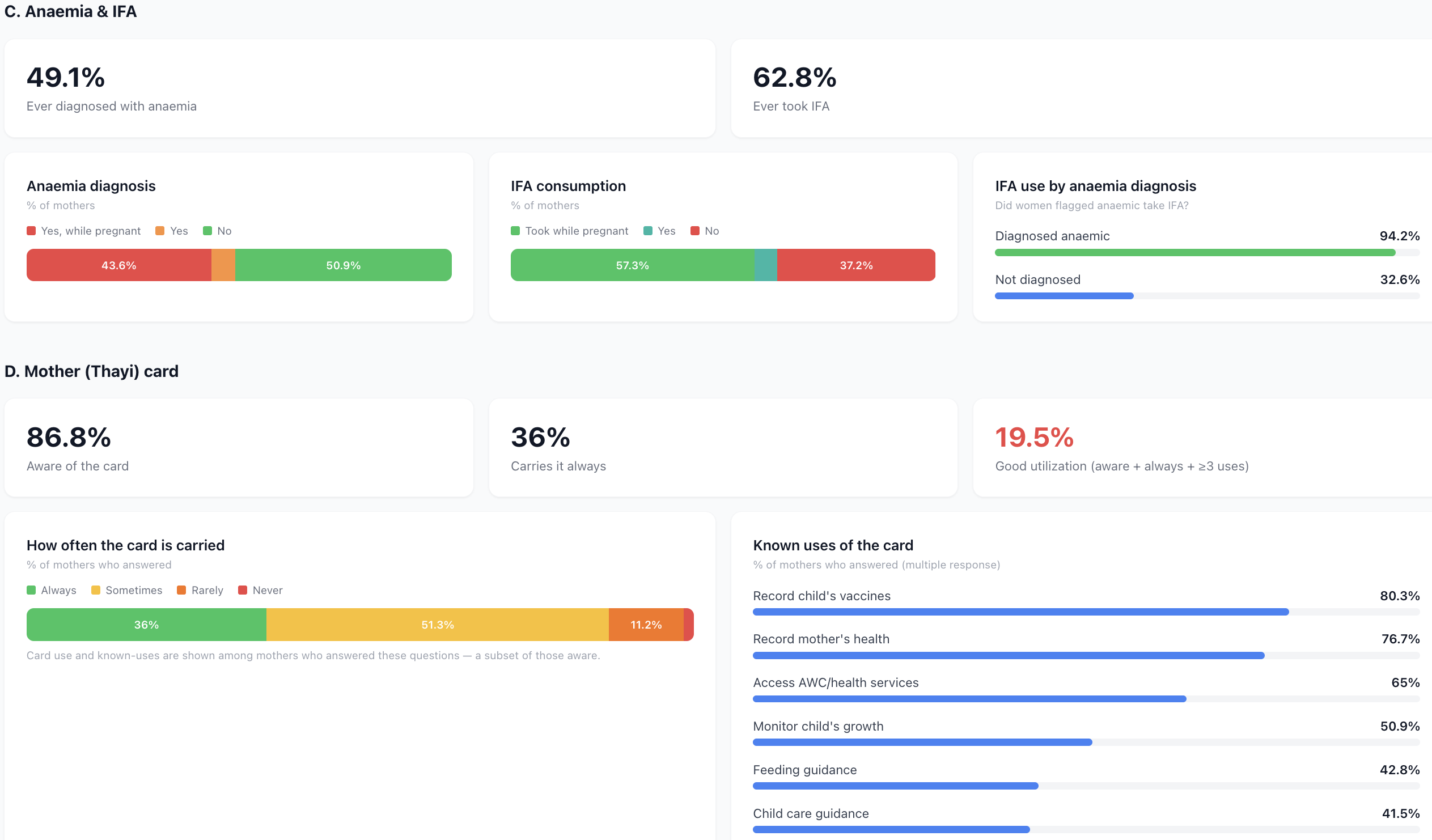
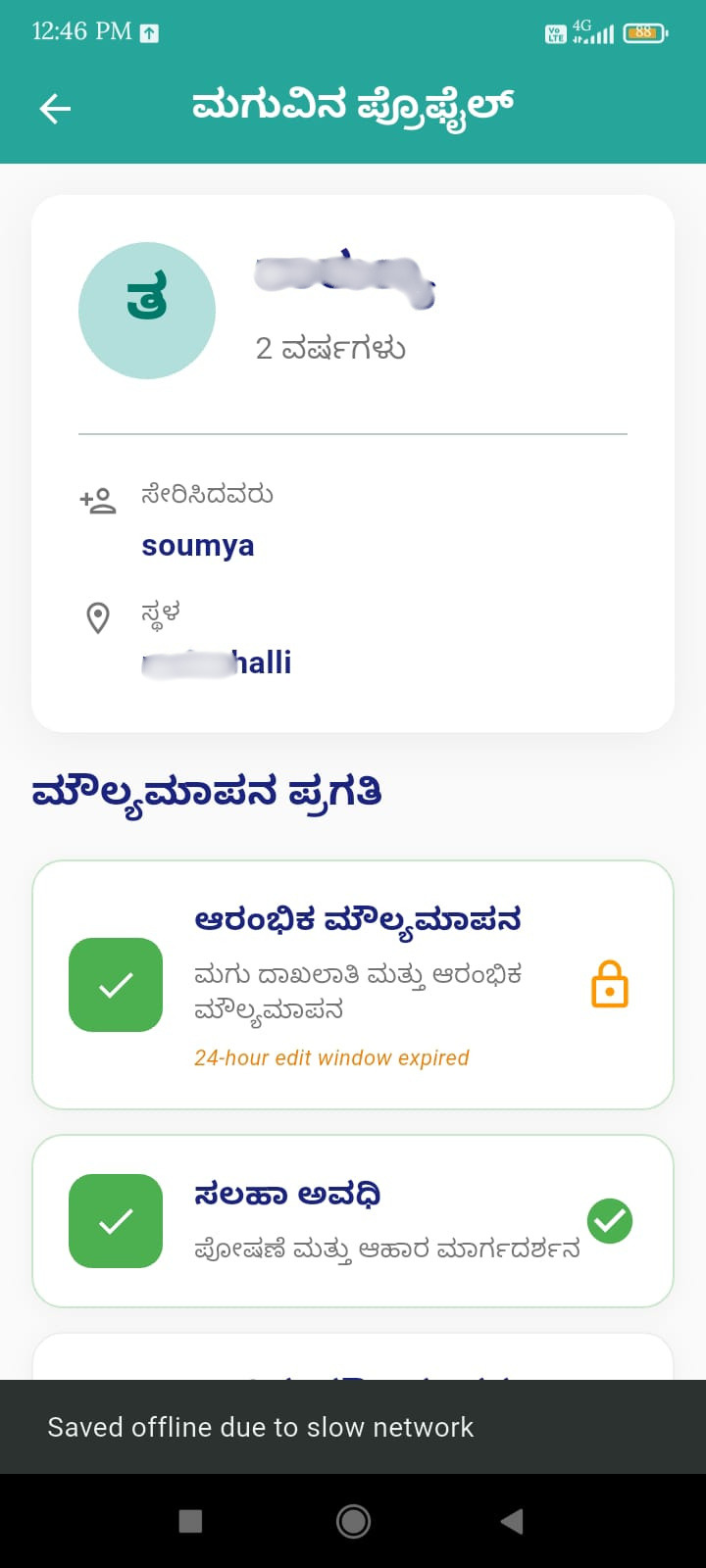
- Offline-first capture. Records save on-device and sync when the network returns — no data lost in low-signal villages.
- Authenticity built in. Every visit is geo-tagged and photo-verified for traceable, auditable data.
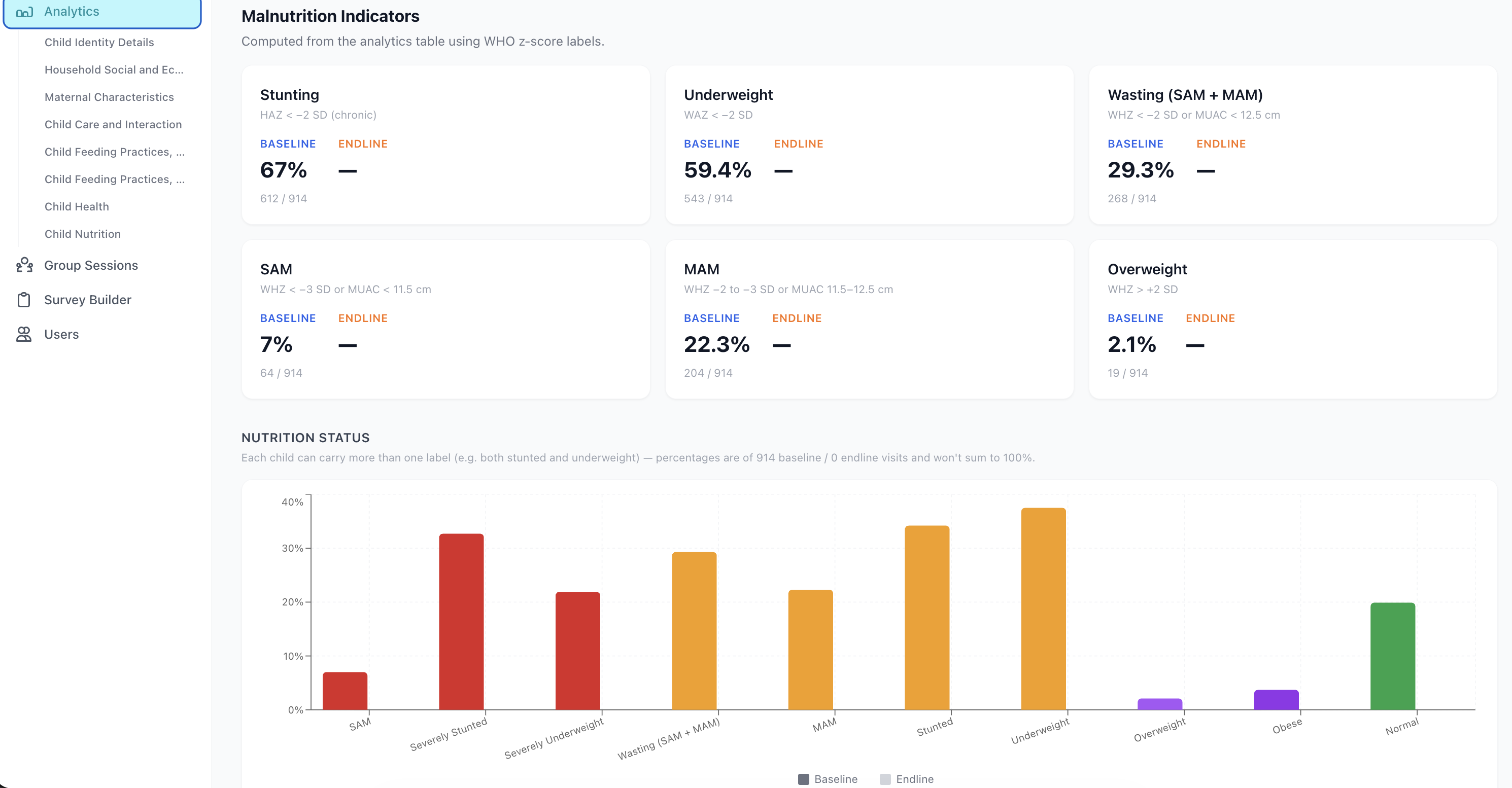
- Our own WHO anthropometric API. Height, weight and MUAC become WHZ / WAZ / HAZ and nutrition labels through a z-score engine we built in-house — no manual calculation, no third-party dependency.
- Bilingual by design. Field workers work entirely in Kannada; managers toggle Kannada or English.
- Manager's cockpit. Assign field workers, monitor coverage and data quality, analyse trends, and export CSV for donor reporting.
What the data surfaced
Baseline findings from one of the live projects, computed by WHO anthropometric API.
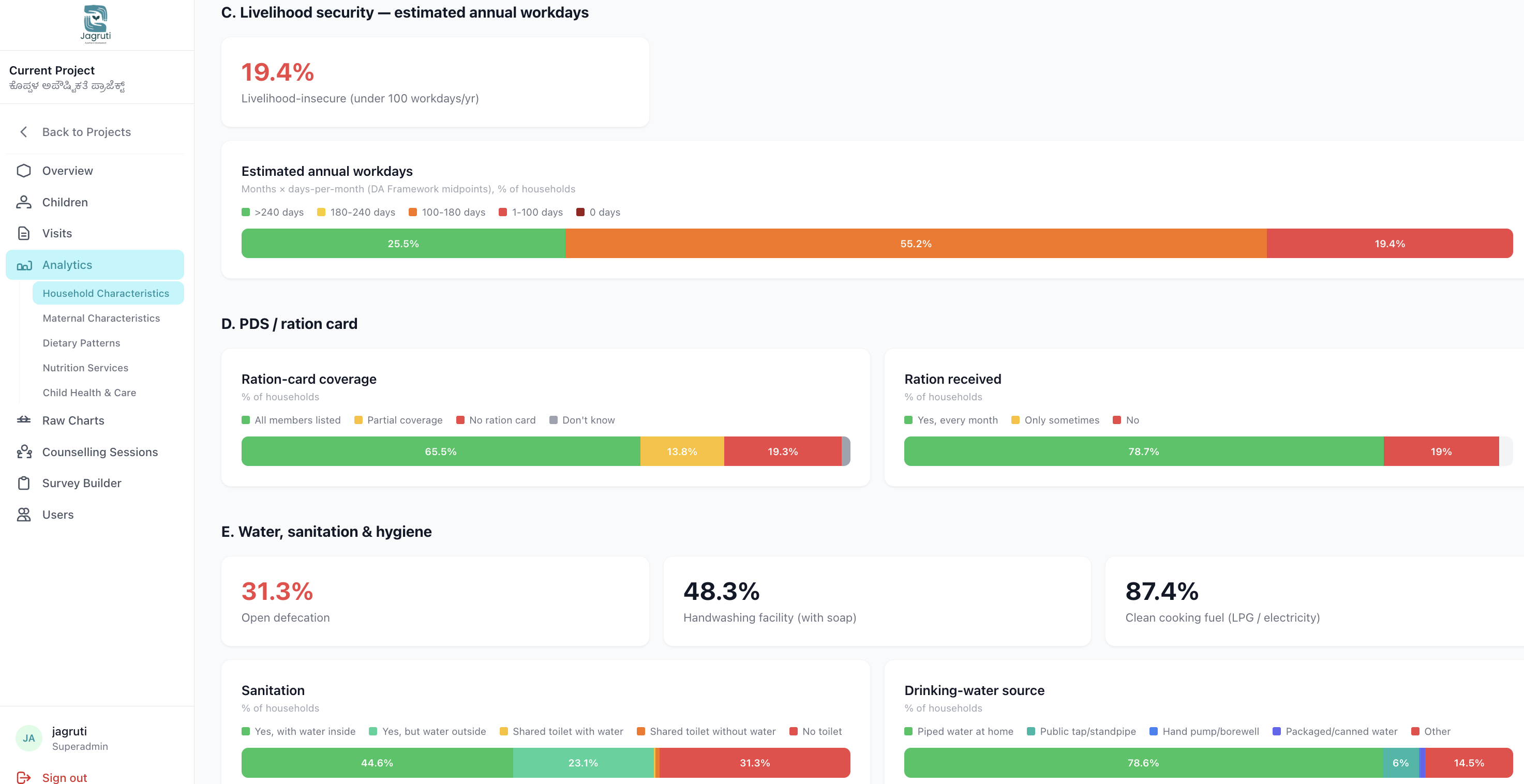
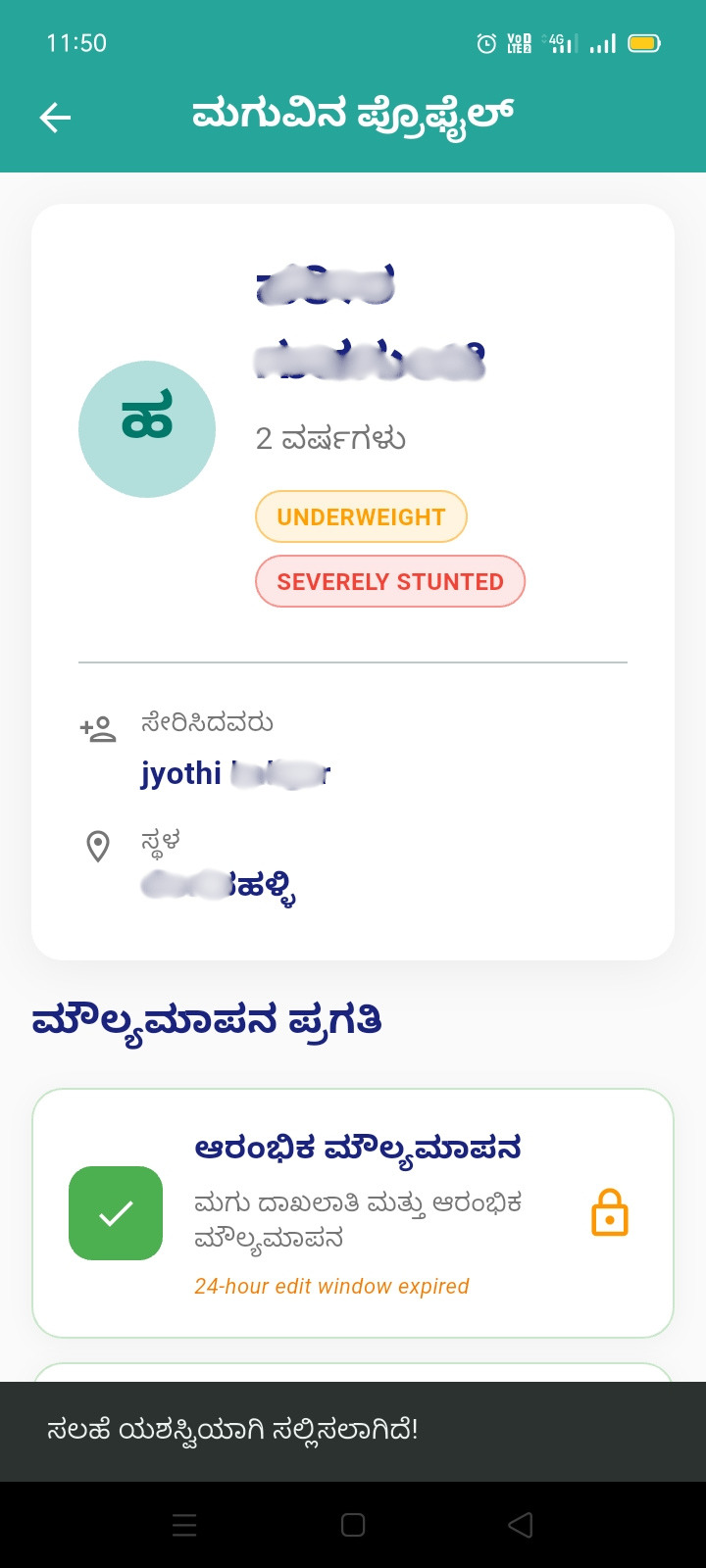
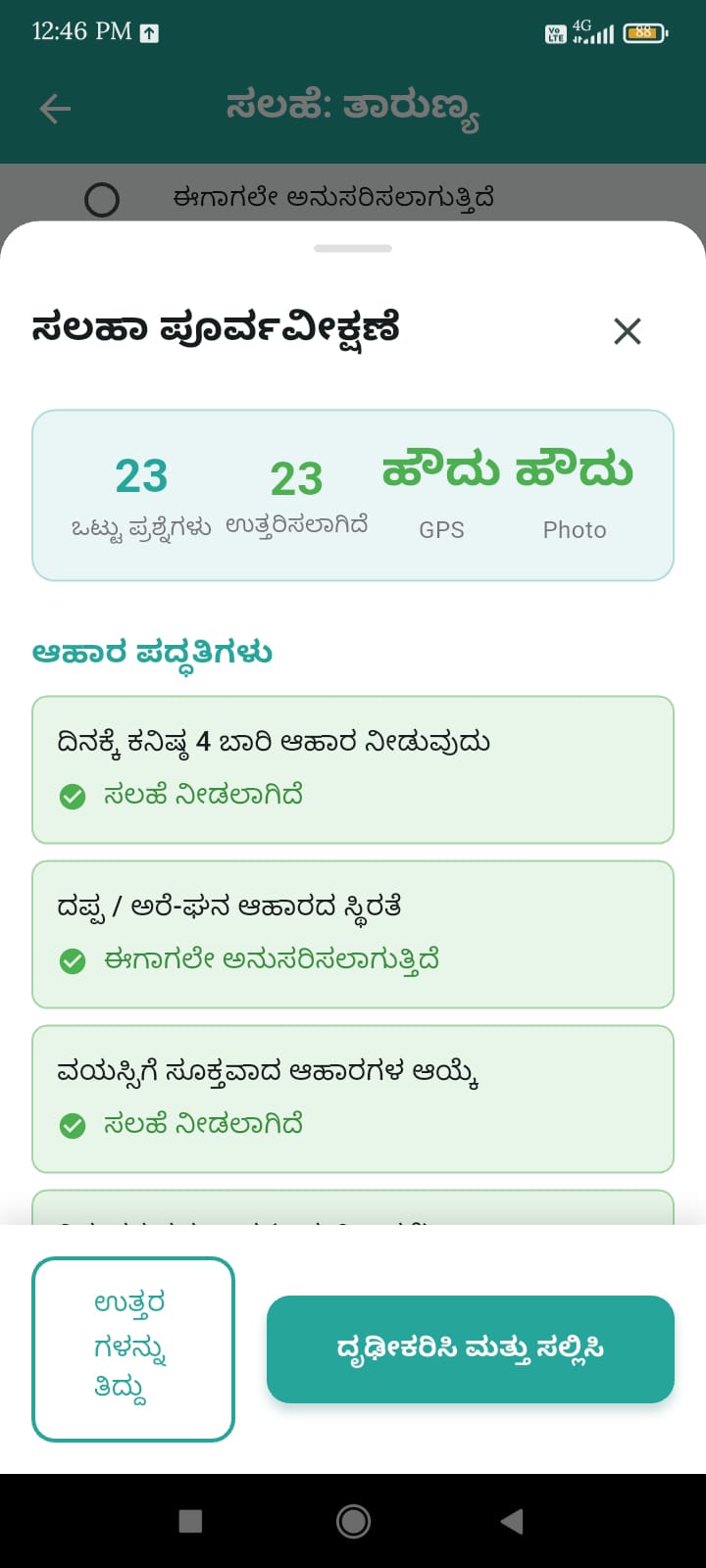
DELIVERED PRO BONO BY OUR FOUNDER WITH ONE PAID INTERN — THE WORKING PROOF OF THE MIKA LABS MODEL.
Every project produces two outcomes.
One budget, two kinds of impact. That's not a slogan — it's the structure of the model.
An NGO gets equipped
Field-grade tools and real-time visibility that raise the ceiling on what a team can do.
Engineers get made
Interns ship real software for real users under senior mentorship — and leave with a portfolio and the habits to match.
Two ways in.
Whether you run programmes in the field or fund the organisations that do, there's a conversation worth having.
Tell us what's slowing your field work down.
If your team is drowning in paper registers, late data, or reporting overhead, write to us. We'll start with a free needs assessment — no jargon, no obligation — and tell you honestly whether software will help, and what it would take.
Write to usMultiply what your grant rupee does.
Funding MiKa Labs equips multiple grassroots organisations with lasting technology while training young engineers — two documented outcomes per project. Ask for our concept note and a live walkthrough of the Jagruti system.
Request the concept note